GuidePublished: July 13, 2026 · Last updated: July 13, 2026 · ~7 min read
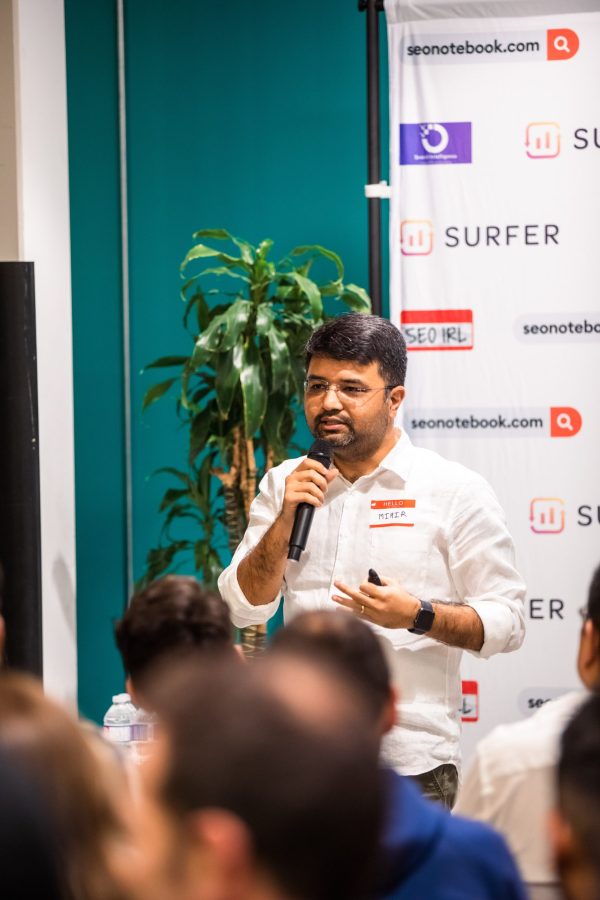
Mihir Naik, Senior PM (AI) at seoClarity

How AI Interprets Your Prompt: The Router and Query Fan-Out

Before an AI engine reads a single page, it does two invisible things to your question: it decides whether the web is even needed, and if it is, it rewrites your one question into many. This is the interpret stage, and it is where you first make the shortlist or never enter it. Most of the questions your content is judged against here are questions no one on your team ever typed.
Executive summary
The interpret stage has two moves. First a lightweight classifier decides whether to answer from memory or go to the web. Then, if it searches, the engine expands your prompt into a set of sub-queries through a technique Google calls query fan-out. You are matched against those hidden sub-queries, so covering them, not guessing keywords, is the work.
  • A query classifier decides, in a fraction of a second, whether the question needs a live search. Time-sensitive, factual, and entity-heavy questions tend to trigger one.
  • When it searches, the engine fans your question out into multiple sub-queries, including comparisons and follow-up questions you never asked.
  • Fan-out is deliberate, not random: Google patent filings describe generating related, implicit, and comparative queries on purpose.
  • Matching is by meaning, not exact wording, so genuinely answering each sub-question beats repeating a target phrase.

Why does one question become many?

When the engine does decide to search, it rarely searches for what you typed. Instead it expands your prompt into a whole set of related searches and runs them at once. Google calls this query fan-out, and describes AI Mode breaking your question into subtopics and issuing a multitude of queries on your behalf, then pulling the results back together into a single answer.
The mechanism isn’t a guess. A Google patent application, ‘Search with Stateful Chat’ (US20240289407A1), describes a method it calls prompted expansion: the model is explicitly instructed to generate a diverse set of synthetic queries from your original prompt. One question in can become many retrieval queries out, and in deeper research modes, far more.
What fan-out looks likeAsk ‘things to do in Nashville with a group’ and the engine may quietly search for great restaurants, popular bars, and things to do if some of the group has kids, angles you never spelled out but that clearly sit inside your intent. Each of those runs as its own search.
Your page is not competing for the question the user typed. It is competing, separately, for each sub-query the engine invents, and it can win some and lose others in the very same answer.
Sources & further reading

What kinds of questions does it invent that you never typed?

Fan-out isn’t just more of the same query; the patent describes generating queries with intent diversity, deliberately covering different angles of your need. A few recurring types matter most for how your brand gets represented:
  • Related queries: adjacent subtopics of your question, widening the net around your intent.
  • Implicit queries: the unstated next step. ‘How to install solar panels’ quietly generates ‘average cost of solar panels,’ a question you didn’t ask but almost certainly have.
  • Comparative queries: ‘A vs B’ matchups, generated even when you never asked to compare anything.
  • Exploratory and decision queries: ‘how does X work,’ or ‘best X for Y situation.’
  • Recency queries: fresh, time-bound versions when the topic looks like it changes over time.
The comparative and implicit types are where this gets strategic. Your brand is being compared, evaluated, and positioned inside queries no one on your team ever searched for, and the answer is assembled from whoever happened to have published content matching those hidden sub-queries.
If you don’t publish the comparison, the definition’s natural follow-up, or the ‘best for’ answer, the engine still runs those searches. It just fills them with someone else’s page.
For leadership
Your category is being evaluated through questions your team never tracked in a keyword tool, ‘us versus a competitor,’ ‘alternatives to us,’ ‘is this right for enterprise.’ Those hidden comparisons shape the answer as much as your own branded terms do.
Sources & further reading

Does it match your words, or your meaning?

Those sub-queries aren’t matched against your page by exact keywords. AI search works on meaning. Under the hood, both the query and your content are turned into embeddings, numeric representations of meaning, so the engine can find content that says the same thing even when it uses completely different words. (That machinery is the subject of a later part in this series; here, the takeaway is what it does to your writing.)
Because matching is semantic, repeating a target phrase does little. What helps is actually answering the question the sub-query represents, in plain, direct language. A page that clearly explains a concept will match many phrasings of it; a page stuffed with one keyword but thin on substance matches none of them well.
You can’t reverse-engineer fan-out by guessing exact keywords. Cover the concepts and their obvious follow-on questions thoroughly and clearly, and you match more of the hidden sub-queries by default.

What does query fan-out change about your content?

The shift is from targeting a keyword to covering a question space. If the engine turns one prompt into a dozen searches, then being ‘the best page for the head term’ matters less than having a credible answer to each of the sub-questions that head term implies.
How to work with fan-out, not against it:
  • Map the sub-questions. For each priority topic, list the related, implicit, and comparative questions fan-out is likely to generate, and make sure something you own answers each one.
  • Publish the comparisons. If you don’t have an honest ‘you vs the main alternatives’ page, the engine sources that comparison from a competitor or a review site instead.
  • Answer the implicit next step. Pair the how-to with the cost, the definition with the alternatives, the feature with its limitation. Fan-out will ask for all three.
  • Write for meaning, not density. Clear, self-contained answers match more phrasings than keyword-tuned copy ever will.
This also explains a pattern people find surprising: pages that don’t rank on the first page of classic results still get pulled into AI answers, because they happened to be the best match for one specific sub-query. Fan-out rewards depth of coverage across a topic, not just a single ranking.
For leadership
Budgeting content around a shortlist of head keywords underfunds the exact place AI answers are decided: the sub-questions. Fund topic coverage and honest comparisons, not just the terms with the biggest search volume.
Sources & further reading
What’s next
Becoming visible in AI search is a technical problem with a revenue outcome. If you'd rather have it diagnosed and fixed, here's how I can help.
Mihir Naik
About the author
Mihir Naik, Senior Product Manager (AI) at seoClarity, building Clarity ArcAI. Born in Surat, India; based in Toronto. In SEO since 2011. Available for consulting.
Read full bio →