Stop Gatekeeping Your Expertise. Publish It.
AI made knowing things cheap. The professionals who stand out now understand a real person's problem, explain the fix in plain words, and deliver it with productized expertise they publish freely, on their team and in the market. Notes by Mihir Naik.
AI made knowing things cheap. The people who win now do the whole loop: understand a real person's problem, explain the fix in plain words, and deliver it with productized expertise, then give that understanding away freely instead of guarding it. So stop gatekeeping your expertise. Publish it.
The question every marketer is quietly asking
Over the last few years I've been very active on LinkedIn, sharing what I see from the front lines of enterprise SEO and AI search. Lately the same worry keeps surfacing, in DMs, in comments, in hallway conversations: AI is doing so much of the work now, so how do I still stand out when I go looking for the next role, the next client, the next opportunity?
It's a fair fear. When a tool can draft the brief, write the code, build the audit, and summarize the research in seconds, the things a lot of us built our careers on start to feel replaceable. But I think the fear points at the wrong thing. AI didn't erase your value. It moved it.
What AI made cheap, and what it made scarce
Here's the shift underneath the anxiety. AI collapsed the cost of executing known expertise to nearly zero. Anything that was "I know how to do this and you don't" is now one good prompt away for everyone. When execution becomes free, value doesn't disappear, it climbs up the stack.
It moves to the things AI can't do for you: learning faster than the people around you, truly understanding the problem a real person is stuck on, explaining the fix in words they trust, and getting humans and systems to actually adopt what you've built.
What AI made cheapWhat's now scarce
Knowing the answerLearning the next thing, fast
Generating a solutionUnderstanding the real problem
Sounding like an expertMaking someone feel understood
Writing the playbookGetting it adopted
Access to expertiseProof you can deliver it
Hoarding what you knowTeaching it in plain words
Read that right-hand column again. None of it is knowledge. It's metabolism (how fast you turn new information into something that works) and empathy (whether you understand the human on the other side well enough to help them).
Expertise was never the moat
For years the instinct was to protect what you knew. Keep the framework behind a paywall, the process in your head, the template on your own drive. That instinct made sense when knowing the thing was the hard part.
It doesn't anymore. I'm not going to tell you gatekeeping is dead, plenty of people still sell courses and guard playbooks and do fine. But as a way to stay ahead, hoarding the "what" has quietly become a weak moat, because AI can reproduce and distribute the "what" for pennies. The advantage moved from owning knowledge to metabolizing it faster, and to translating it into help a real person can use.
Expertise stopped being the moat. What's scarce is the loop around it: understand the problem, explain the fix simply, and deliver it, over and over, faster than the next person.
Winning is a loop, not a library
Somewhere out there, right now, someone is stuck on a problem you know how to solve. They're not looking for the smartest person in the room. They're looking for someone who gets it, and can help.
The people who win, for jobs, for clients, for trust, run a loop most people skip three-quarters of:
- Understand the problem, the actual one, not the one that's easy to solve.
- Meet them with empathy, where they are, in the language and the fears they actually have.
- Explain the fix in simple words, so they can see how you'll help before they ever pay you.
- Deliver with productized expertise, using the skills and systems you've built so the result is reliable, not heroic.
Here's the trap: almost everyone obsesses over that last step, the clever tool, the fancy workflow, and skips the first three. But AI can already generate a competent solution. What it can't do is sit with a nervous stakeholder, hear the problem behind the problem, and explain the way forward so simply that they finally exhale.
AI can generate the answer. It can't understand the person. Explaining your solution in plain words isn't dumbing it down, it's proof that you understand both the problem and the human in front of it.
And explaining freely, teaching in public, is the truest form of not gatekeeping. It's how people come to trust that you can help before you ever send an invoice.
The delivery half: from what you know to what a team runs
Empathy and a clear explanation earn the chance to help. Then you have to actually deliver, reliably, at a scale one person can't sustain by hand. That's a specific climb, and every rung adds leverage the one below it doesn't:
- Learn something new, and do it fast. Raw input.
- Distill it into expertise, the three things that actually matter out of the hundred that don't. This is judgment.
- Systematize it into a repeatable workflow, same steps, same quality, every time. This is consistency.
- Package the workflow into a skill, something a person or an agent can run cold, without you in the room. This is transfer.
- Drive adoption, get people and systems to actually use it. This is scale.
Most people stop at rung two. The differentiation lives in rungs three, four, and five, the rungs that never fit on a resume, because almost nobody climbs them.
What I mean by "a skill"
"Publish it as a skill" can sound abstract, so let me make it concrete. A skill is any packaged, runnable artifact that carries your expertise so someone else, human or machine, can pick it up cold and get your result:
- A Claude Skill or a custom GPT that runs your workflow end to end
- An MCP server that hands your process to any AI tool
- A script or notebook that automates the tedious part of your job
- A template, checklist, or documented prompt chain anyone on your team can follow
The format matters less than the property: it runs without you. A slide deck describes your expertise. A skill is your expertise, in a form that executes. That difference is the whole point.
Why giving it away is the differentiator
Here's the part that feels backwards: teaching the problem openly and publishing the skill for free is what sets you apart, not hoarding either one. Three reasons, and none of them are "good karma."
One, a shipped skill is proof of work that can't be faked. Anyone can claim expertise on a profile. Very few can hand you a working thing that produces the result. In a market flooded with AI-written confidence, a running artifact is the credential.
Two, teaching is how trust compounds. When you explain someone's problem back to them more clearly than they could, and hand them something that helps, you've proven you understand it, before any contract. That reach and that trust are worth far more than the secret ever was.
Three, you give away version one while you're already on version three. By the time the skill is public, you've learned what it can't do, where it breaks, what to build next. Publishing isn't surrendering the edge. It's a signal that you're already ahead of it.
The edge was never the playbook. It's your rate of understanding new problems and writing new fixes. When you publish, you're not giving away your advantage, you're publishing the exhaust of an advantage you've already moved past.
But won't I train my replacement?
This is the fear that stops most people, so let's name it. If I package what I know and give it away, aren't I commoditizing myself, or worse, handing someone the thing they'll replace me with?
I've come to believe the opposite. The people who get commoditized are the ones whose entire value was a static piece of know-how, the exact thing AI now does for free. The people who don't are the ones who've shown they can run the whole loop again: understand a new problem, explain it, build the fix, ship it. You can't automate someone whose real skill is understanding people and producing the next solution. Publishing is how you prove that's who you are.
The team dividend
The same move that differentiates you personally is the one that scales a team, and this is where it gets valuable to a leader. Tacit expertise, the kind that lives in one person's head, doesn't transfer. It bottlenecks. A productized skill does transfer: it raises the floor for everyone who runs it, on their worst day, without a meeting. And when you also teach the team to read the problem, not just run the tool, you've multiplied judgment, not just output.
So the professional who packages, publishes, and teaches stops being "the person who knows the thing" and becomes "the person who raises the whole team's output." In an org, that's the difference between a specialist and a force multiplier, and it's exactly the profile that survives every reorg.
What this looked like for me
I'm not describing a theory I read. It's the pattern my own last few years have followed. Back in 2022, I started measuring how brands showed up in AI search, before it was a category anyone had named, and I kept writing about it on LinkedIn in the plainest words I could, because most people were confused and anxious about it. That was the first half of the loop: learn early, and help people understand.
Then I turned it into systems. Today I'm a Senior Product Manager (AI) at seoClarity, building Clarity ArcAI, our AI search visibility platform, and along the way I've shipped SEO automation, an enterprise API, an MCP server, and open-source tools I put out for anyone to use. That's the delivery half: systematize, then package.
And adoption, the last rung, is the part I learned the hard way running enterprise SEO programs, where nothing counts until product, engineering, and content teams actually use it, which only happens when they understand why it matters. I didn't become more valuable by guarding what I knew. I became more valuable every time I explained a hard thing simply and gave a working version away.
Start with a problem someone actually has
You don't need a new specialty to start. Pick one problem you already know people struggle with, the thing colleagues quietly ask you for, write down how you'd explain the fix to a smart friend in plain words, productize that one workflow into a skill, and publish both, the explanation and the tool. Freely. This week, not next quarter.
The days when guarding your expertise was the smart play are behind us. What's scarce now isn't what you know, it's how quickly you understand a real problem, explain it in words people trust, and follow through all the way to a delivered result. That's the skill worth building. Everything else, AI will handle.
In an AI market, your edge isn't what you know. It's:
- Whether you truly understand the problem someone's stuck on
- Whether you can explain the fix in words they trust
- Whether you can package your expertise, deliver it, and teach the next person freely
Stop hoarding the playbook. Explain it, publish it, deliver it, then go understand the next problem. Related scratch notes stay listed on the notes index.
What’s next
More long-form methodology lives in guides; notes stay informal.
About the author
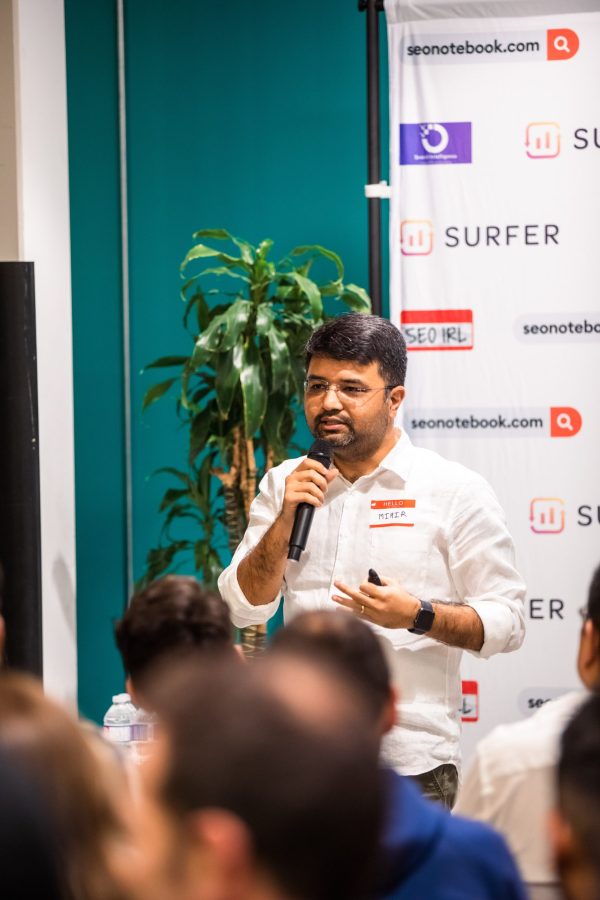
Mihir Naik, AI search (AEO) professional and product leader. Senior Product Manager (AI) at seoClarity, building Clarity ArcAI. Based in Toronto; in SEO since 2011. Available for consulting.
Read full bio →